
Preparing Boat for Transport
The following is not intended to intimidate or deter you from transporting your boat but more to educate you, so that you are aware of the pitfalls associated with improper preparation. We treat every boat like it is our own and this is only intended for you to have a positive experience.
It is important that you thoroughly prepare your vessel for transport. If you cannot prepare your vessel yourself, please make arrangements with the marina or another party to do so. It is not the responsibility of the hauler to prepare your vessel. If the driver has to prepare or secure items, you will be charged a fee based on what needs to be done. The driver will only secure items on the outside of your vessel and will take no responsibility for any damage done during transport due to your failure to prepare your vessel.
Power Boat:
Preparing your vessel:
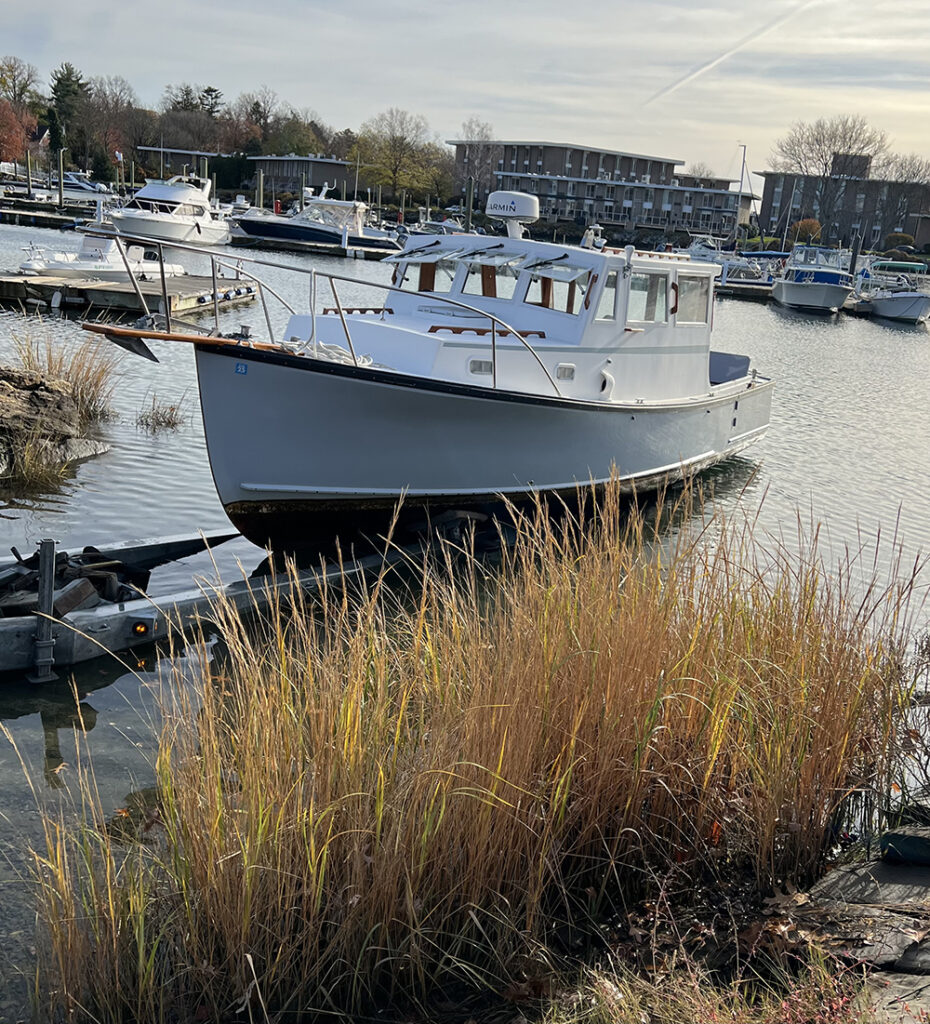
1. Legal Height Requirements: The maximum legal height for a vessel is 13 feet, 6 inches. Equipment mounted on the vessel which will cause the height to exceed 13 feet 6 inches must be removed prior to transport. These items include radar, tv antennas, FLIR, spotlights, etc. In some cases, this height restriction may require the actual arch and or hard top to be removed and stowed on the vessel.
2. Secure Galley: Make sure all loose items in your vessel such as plates, cups, fishing rods, personal items are secured or removed. The driver will not inspect the inside of the boat.
3. Topside Preparation:
• Any electronic covers, cushions not permanently mounted, zippered window panels, bimini tops and frame, bumpers, life jackets and all topside electronic equipment should be removed and secured inside the boat. Anchors if still attached on boat need to be tied off in a manner in which an accidental deployment cannot happen. Any hatch covers which cannot be locked down should be secured in a manner to avoid accidental opening at highway speeds.
• All hatches and windows should be locked.
• All canvas tops and side curtains, cushions etc., must be removed prior to transport. The driver is not responsible for ripped or missing curtains that occur during transport. These items will almost always be damaged at highway speed.
• Windshields should be protected with some form of windshield barrier. This can be done by tapping cardboard securely over the window or bubble wrap. S&J marine cannot be responsible for rocks, stones and other debris which are kicked up during transport It is not uncommon for pebbles to hit windshield during transport.
• Shrink Wrap – We do not accept responsibility for boats that are shrink wrapped or covered. Any damage caused by wrapping or covers will not be the driver’s responsibility. The manner in which a boat is shrink wrapped for winter storage is not intended to be subjected to highway winds and must be removed prior to the arrival of the driver. Shrink wrap is different for over the road transportation. If you plan to leave shrink wrap on during transport you must confirm proper wrapping was done.
4. Disconnect Batteries
Disconnect the boat’s batteries to prevent any electrical issues during transportation.
Sail Boats:
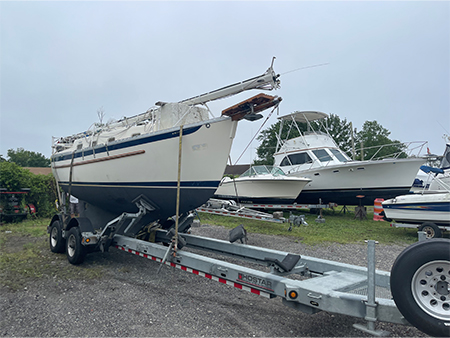
Proper preparation of your sailboat is crucial to ensure safe and efficient transport.
Every effort should be made to reduce the height as much as possible.
The overall loaded height does not exceeds 13’6”.
Secure Galley:
Make sure all personal and loose items are secured or removed.
Ensure hatches, windows, doors are securely closed and latched.
Use tape or additional fasteners if necessary.
The driver will not inspect the inside of the boat.
• Topside Preparation:
All deck gear needs to be stowed inside the cabin.
Remove any rigging, spreaders and antennas.
Use padding or protective covers to safeguard delicate or fragile equipment.
• Mast
Mast must be loaded and secured for travel on top of the sailboat by Marina. The mast must not exceed 12 feet off the rear of the sailboat. If more the 12 feet overhang is needed an escort vehicle will be required.
Overhang of more than 10 Feet is permissible in the front but not the rear. Securing the mast is the sole responsibility of the owner. S&J Marine will not be held liable for any damage to a mast that occurs during transport due to being improperly secured to the vessel.
If you have any questions about preparing your boat, please feel free to contact S&J for advice.
S&J Marine wants all its customers to have positive experience in the transportation of their boat.